
from Ernest G Hart – August 2011
It was sad to read the reports of the death of Peter Twiss. He gained worldwide fame in March 1956 when he captured the World Air Speed Record in the Fairey FD-2 with a blistering average speed of 1132 mph – ‘faster than the sun’. This was a remarkable increase of more than 300 mph over the previous record.
Peter joined the Fleet Air Arm in 1939. He had a full war, flying Hurricanes from merchant ship catapults, Fulmars in support of the Malta convoys and Seafires over the landings in Algeria. Later he flew intruder patrols in Mosquitoes with the RAF from Ford before a posting to the Empire Test Pilots’ School, then at Cranfield. After the war he joined Fairey as their Chief Test Pilot.

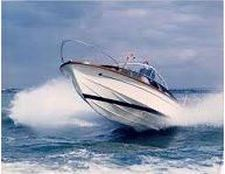
n 1959, Fairey was absorbed by Westland who made helicopters and Peter retired from test flying. He joined Fairey Marine, becoming director and general manager at Hamble. He was a James Bond stand-in, driving a Fairey Spearfish in ‘From Russia with Love’.
In retirement he joined Lasham Gliding Society where I knew him as an occasional member of the ‘Thursday morning breakfast club’ – get there early, pull out and DI the gliders and tow them to the launch point then in to breakfast at 8.30 before the morning’s flying. It was some time before I realized who this quiet unassuming man was. He took his fair share of the chores and was always a willing volunteer to help with glider rigging.
He told us that he took up gliding in the Fairey FD-2.
Back in 1954, on the 14th flight of the FD-2, Peter took off from Boscombe Down and climbed to 30,000 ft. Glancing at the fuel gauge he was amazed to see it steadily wind back from ‘Full’ to ‘Empty’. The rev counter promptly followed suit and the engine stopped. He turned his ‘glider’ back towards Boscombe Down, using the controls carefully to conserve the limited hydraulic power still available.

Following guidance from the control tower he broke cloud below 3000 ft and was relieved to see the runway 6 or 7 miles ahead. There was sufficient hydraulic power left to lower the nosewheel, but not the mainwheels. Nor could he lower the ‘droop-snoot’ which gave him a view of the runway on landing. He crossed the threshold at 230-240 mph and held off for a blind landing
After sparking along the runway for over a mile the FD-2 veered off onto the grass. Concerned that the jolting could set off the ejector seat, Peter jettisoned the hood and leapt out as the aircraft slowed to a stop.
A valuable aeroplane had been saved and Peter earned the Queen’s Commendation for Valuable Service in the Air.

What had caused the problem? – a small section of loose sealing strip had been cut off in case it was sucked into the intakes. The resulting tiny gap allowed pressure to build up in the fuselage and the rubber fuel tank had collapsed.
The FD-2, now in its post-record colour of celebratory blue, can be seen in the FAA Museum at Yeovilton.
This and the other interesting tales in Peter’s full life can be read in his autobiography ‘Faster than the Sun’, first published in 1963 with a revised edition in 2005.
