
Sir George Cayley
His passenger-carrying glider flew more than 50 years before the Wright brothers’.

His passenger-carrying glider flew more than 50 years before the Wright brothers’.

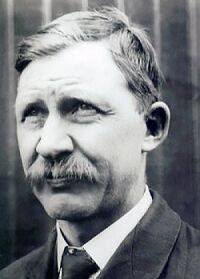
The essential supporter of the Wrights. He built their first engine.

His clever design was the first aeroplane bought by the War Office, the US Signal Corps and the Canadian military.

principal support for A V Roe’s early aeroplanes, tested and sold Bristols and won the 1914 Schneider Trophy race.


The first American woman to become a licensed pilot and the first woman pilot to fly across the English Channel. Just three months later she died in a tragic accident in Boston.

the early parachute jumps and the girl whose deliberate jumps didn’t always go well.

They attacked Zeppelins and submarines and introduced triplanes to the air war.

His extra-ordinary achievements, mostly unauthorised.

He learned to fly with Graham White and despite having to wear spectacles, flew in WWI and became a life-long test pilot, in Europe and the USA.

A brief look at his designs, helicopter, 4-engined bomber, flying boat, helicopter.


Navigator of the Southern Oceans – WWI fighter pilot, self-taught navigator, he made many pioneering flights over the Pacific and Indian Oceans.


A tremendous achievement which seemed to embarrass the Air Ministry.
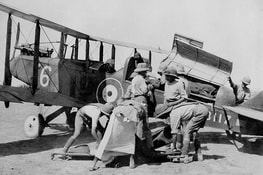


‘Organise an evacuation – tomorrow’ was the order. And he did.

Powering the smallest aeroplane with the biggest engine doesn’t necessarily produce the winner.

The winner of one of the prizes still flies at Shuttleworth.

one of the entrants and a replica of another are Shuttleworth fliers.

The first flights over the Poles – both North and South.

The challenge to be first to fly from California to Hawaii ended tragically for many entrants.

There’ve been many retreats from Kabul. This one worked out rather well.

US style racing, huge engines powering tiny, dangerous planes.

Handley Page was furious when his proof-of-concept design didn’t win the competition.

Being asked to pick a favourite from Shuttleworth’s collection of aviation exotica induces a flurry of regretful rejections. How could anyone not choose the racy red Comet,

It all started in 1912. Jacques Schneider was an aviation enthusiast who believed that floatplanes were the future of aviation. They could operate from rivers,

The Schneider Trophy competition for seaplanes was first announced in 1911. It was a contest for speed over a triangular course and became a vehicle for the

This 1967 photograph of the 53’ Gypsy Moth IV brought Francis Chichester his greatest moment of world-wide exposure. He was rounding Cape Horn on his record-breaking solo round-the-world

Wiley Post was born in Texas in 1898, the youngest son of a farmer. But he had no interest in farming, or in school. It

The highest mountain in the world began to attract the attention of serious mountaineers from the beginning of the 20th Century. It was difficult to

We’ve just past the 75th anniversary of a significant flight. It is notable for its daring and successful execution.It appears in this Newsletter on the

If you fly to New Zealand today you’ll arrive at the Jean Batten Terminal at Auckland Airport although it’s more usually referred to as the

12 January Amelia Earhart lands at Oakland after 18 hr flight from Honolulu.12 February USN Macon crashes

Clouston was running his second hand car business in New Zealand when he heard that Charles Kingsford Smith in Southern Cross was making the first

Mike was just 18 when he started his career as an air traffic controller at Liverpool’s Speke airport in 1970. He went to work in

Aeroplanes had developed rapidly during the First World War with the stimulus of the need to out-perform the enemy. With peace came the opportunity to

The earliest aspiring aviators drew their inspiration from birds and built machines to imitate their shape. The next step was more difficult. How could they


Helmut Steiger was a Swiss aircraft engineer who completed his training at Imperial College in London. There were job opportunities at several of the small

It is modestly displayed. It hangs quietly out of the way in one of Shuttleworth’s hangars – a small silver and blue light aeroplane, usually

She was, and probably still is, America’s most famous ‘aviatrix’. Yet she was never a particularly skilled or natural pilot. She was 23 before she

Arthur Clouston was one of the first civilians employed as a test pilot at Farnborough. A New Zealander, he had previously served four years in the

It is very unusual to carry passengers in wings, for a number of logical reasons. Wings have a special curved shape and are mostly quite
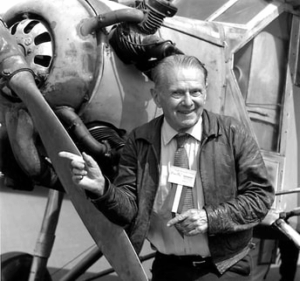
It was a quiet afternoon in July (1938) when a rather scruffy little aeroplane landed at Baldonnel airfield, Dublin. The pilot was walking towards the

A very welcome recent arrival in the Shuttleworth hangars is the Percival Mew Gull. It was last here in 2002 and has since been privately owned

It had been a very early start. The passengers had been roused from their beds at 2.30 am. They had enough time to enjoy a

An experimental flying boat using an interesting design concept. In 1936 the Air Ministry issued Specification R1/36 which called for a medium-sized reconnaissance flying boat

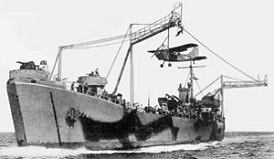
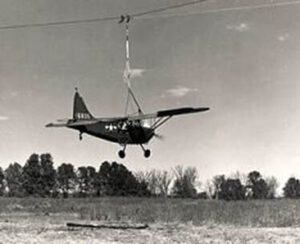
In the 1930s aircraft were growing heavier, needing larger airfields for operation. There was more than a passing interest in developing some method of helping a

After man first took to the air in 1783 the military mind soon focused on how to use the elevated position for observation and reconnaissance.
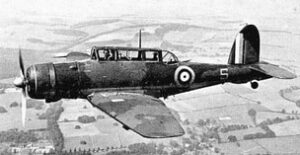


From Eben Emael, via Crete, Sicily, and Normandy to the Rhine, with a few interesting diversions.


He fought the Germans and Italians in France, the British in Syria then flew – and died with the Americans in Algeria.

Designs from the ‘Iron Works’ are notoriously strong. This Wildcat dramatically justified that reputation.


The navigator left his maps behind, all English airfields were closed and there was nowhere else to go.


R J Mitchell’s flying boat. Was the RAF Museum’s Stranraer really flown by Hughie Green?


Frank’s crew bombed the Tirpitz, twice. His last op. ended in a crash in fog.


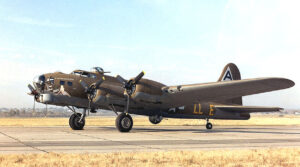
Intensive operations – 45 of them – with the Light Night Striking Force

He flew every mark of PR Spitfire, his last op. on the last day of the war.



from Ernest G Hart – August 2011 It was sad to read the reports of the death of Peter Twiss. He gained worldwide fame in


a free and easy, if occasionally perilous glider launcher.

Britain’s major glider builder from 1934 to 1968. Went on to build powered aircraft, underwater vehicles and specialised drones.


(1956) Luxury airliner whose troublesome engines caused accidents, including a ‘perfectly handled’ ditching in the Pacific.

(1956) A remarkable recovery in the Greenland night after fuel flooded into the fuselage.


(1956) and all the other strange wing-in-ground-effect designs which followed


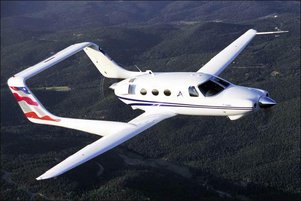

(1969) Too many entrants and too many prizes to remember the winner(s).

The ubiquitous Herc has fulfilled many roles, magnificently, and survived one very unusual event.
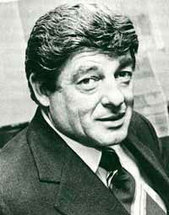
He cleverly rescued a pilot lost over the Pacific and later fought a years long battle against Air NZ to remove the stigma of ‘pilot error’ after an accident in Antarctica.

A lot of progress has been made since the first pedalled prototype flew.

A wander round the light aeroplane rallies of the Nineties.


Unforecasted bad weather seriously challenges Brian’s navigational skills.
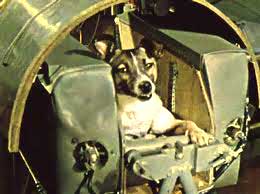

Zeppelins weren’t all killed off by the fire at Lakehurst NJ. You can get a flight in one.


Pegoud set the trend and multiple loops became commonplace. Parachutists do it best – 100s of times.

A Prowler cuts down a cable car, killing 22 people

The exploitation of lee waves is tempting gliders pilots to fly ever higher.

Graham Perry – Sept 08 At our September meeting we welcomed the return of Graham Perry, ex-RAF Engineering Officer and accident investigator. His well-structured talk